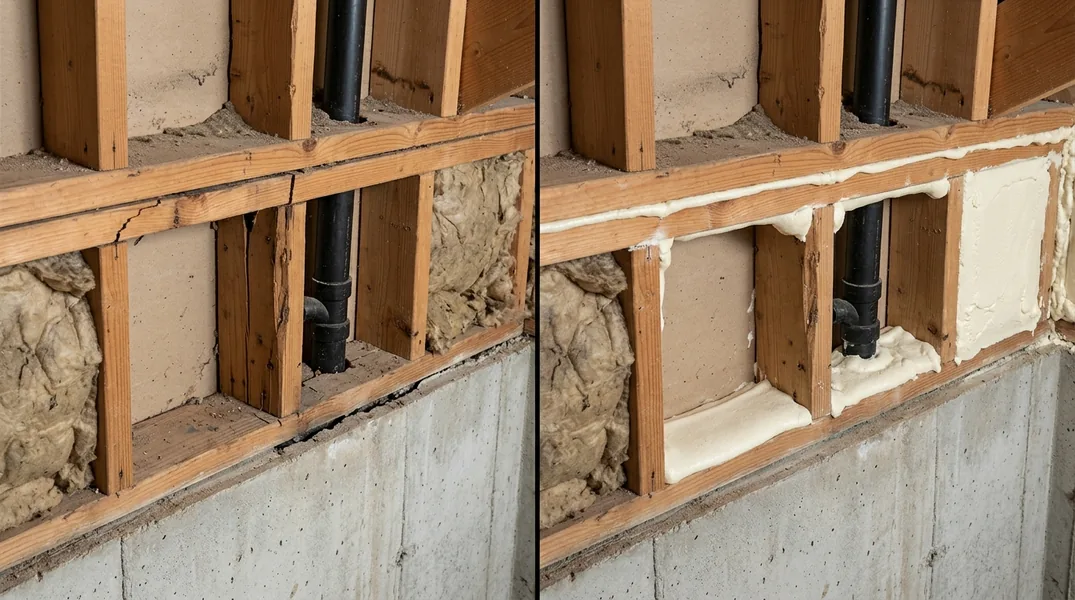
Understanding Spray Foam Attic Insulation Basics
When it comes to upgrading your home's energy efficiency, attic spray foam insulation has become one of the most effective solutions available to homeowners in Fort Collins. Unlike traditional fiberglass batts or blown-in cellulose, spray foam creates an air-tight seal that dramatically reduces heat loss and air infiltration. This superior performance comes from the foam's ability to expand and fill every cavity, crack, and crevice in your attic space.
Before deciding between open cell and closed cell options, it's important to understand how spray foam works. When applied, the foam expands to fill the space, then hardens into a solid insulation layer. The key difference between the two types lies in their cellular structure and how that structure affects their performance characteristics. Both options offer significant improvements over traditional insulation methods, but they excel in different scenarios. Understanding these differences will help you make an informed decision that aligns with your home's specific needs and your budget.
What Is Open Cell Spray Foam Insulation?
Open Cell Spray Foam Insulation features a cellular structure where the cells are not completely sealed. This creates a softer, more flexible foam that typically has an R-value of approximately 3.5 to 3.6 per inch. Because the cells remain open, this type of foam is more permeable to air and moisture, which has both advantages and disadvantages depending on your application.
The primary benefit of open cell foam is its lower cost and excellent sound dampening properties. If you're looking for an affordable solution that also provides noise reduction, open cell spray foam can be an attractive option. However, because it allows moisture to pass through, it's generally better suited for interior applications or climates where moisture control is less critical. In Fort Collins, where the climate tends to be drier, open cell foam can work reasonably well, though it requires careful installation to ensure proper ventilation and moisture management in your attic space.
What Is Closed Cell Spray Foam Insulation?
Closed Cell Spray Foam Insulation features cells that are completely sealed, creating a dense, rigid foam with an R-value of approximately 6.0 to 6.5 per inch. This higher R-value means you need less thickness to achieve the same insulation performance as open cell foam. The closed cellular structure makes this foam impermeable to moisture and air, providing superior moisture resistance and vapor barrier properties.
Closed cell foam is the premium choice for homeowners who want maximum performance and durability. Its density and impermeability make it ideal for creating a sealed attic insulation system that provides exceptional thermal resistance and moisture protection. While closed cell foam typically costs more than open cell options, the superior R-value means you can achieve better insulation with thinner application. For homeowners in Fort Collins seeking long-term energy savings and maximum protection against moisture intrusion, closed cell foam represents a worthwhile investment that can pay dividends over the life of your home.
R-Value and Energy Efficiency Comparison
One of the most important factors when choosing between foam types is the R-value, which measures thermal resistance. Closed cell foam's R-value of 6.0 to 6.5 per inch significantly outperforms open cell's 3.5 to 3.6 per inch. This means that if you're insulating an attic space with an 8-inch cavity, closed cell foam would provide approximately R-48 to R-52 of insulation, while open cell would only reach R-28 to R-29. For homeowners prioritizing maximum energy efficiency and lower heating and cooling costs, this difference is substantial.
In a climate like Fort Collins, where winters can be cold and summers moderately warm, the superior R-value of closed cell foam can result in measurable energy savings on your utility bills. However, if your primary concern is cost and you have adequate attic space for thicker insulation, open cell foam can still provide acceptable energy performance at a lower price point. The choice ultimately depends on balancing your energy efficiency goals against your budget constraints and the specific characteristics of your attic space.
Moisture Control and Unvented Attic Spray Foam Considerations
Moisture management is critical in attic insulation, and this is where the two foam types diverge most significantly. Unvented attic spray foam applications, where the foam is applied directly to the roof deck, require moisture control to prevent condensation and mold growth. Closed cell foam's impermeable structure makes it the ideal choice for this application, as it acts as both an insulator and a vapor barrier. This eliminates the need for additional moisture barriers and simplifies the installation process.
Open cell foam, being permeable, allows moisture vapor to pass through. While this can be advantageous in some climates where moisture needs to escape, it requires more careful planning and potentially additional ventilation or vapor barriers to prevent moisture accumulation in your attic. For homeowners considering an unvented attic spray foam system, closed cell foam is generally the safer and more reliable choice. The moisture protection it provides ensures your attic remains dry and free from the mold and rot that can result from trapped moisture, protecting both your insulation investment and your home's structural integrity.
Attic Spray Foam Insulation Cost in Fort Collins: What to Budget
When evaluating pricing for spray foam attic insulation, you'll find that closed cell foam typically costs between 1.5 to 2 times more per square foot than open cell foam. Open cell foam generally ranges from $0.44 to $0.65 per board foot, while closed cell foam typically costs between $1.00 and $1.50 per board foot. However, because closed cell foam has double the R-value, you may actually spend less overall to achieve your desired insulation level when you factor in the reduced thickness required.
For a typical Fort Collins attic project, the total investment will depend on your attic's size, the desired R-value, and which foam type you select. While closed cell foam represents a larger upfront investment, many homeowners find the energy savings and superior moisture protection justify the expense over time. To understand the true cost for your specific situation and receive a detailed breakdown of expenses, we recommend scheduling a free estimate with Fort Collins Spray Foam Insulation. Our team can assess your attic, discuss your energy goals and budget, and provide transparent pricing so you can make an informed decision with confidence.
Which Foam Type Is Right for Your Fort Collins Home?
Choosing between open cell and closed cell spray foam ultimately depends on your priorities, budget, and attic conditions. If you're prioritizing maximum energy efficiency, moisture protection, and long-term durability, closed cell foam is the superior choice. Its higher R-value, vapor barrier properties, and suitability for unvented attic applications make it ideal for homeowners who want the best performance their investment can provide. If you're working with a limited budget and your attic has adequate space for thicker insulation, open cell foam can still deliver meaningful energy improvements at a lower cost.
The climate and specific conditions of your home also play a role in this decision. Fort Collins' relatively dry climate and temperature fluctuations make closed cell foam's moisture protection particularly valuable, though open cell foam can work if properly ventilated. Rather than making this decision alone, we encourage you to speak with experienced professionals who understand your home's unique needs. Fort Collins Spray Foam Insulation specializes in both foam types and can evaluate your attic to recommend the best solution. Call us today at (970) 672-0707 or request a free estimate to get expert guidance tailored to your home and budget.
Looking for a professional spray foam insulation contractor in Fort Collins? Fort Collins Spray Foam Insulation responds fast for all your spray foam insulation needs.
Get a Free Quote