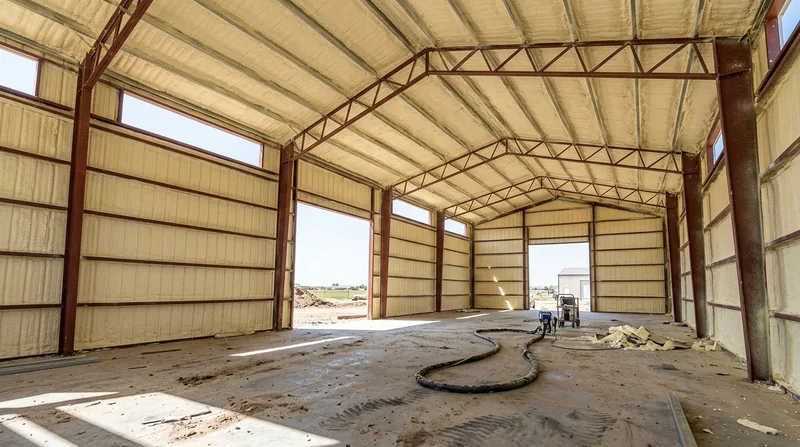




Metal building and barndominium spray foam insulation in Fort Collins is not a luxury; it is a thermal control problem with a concrete solution. Metal structures across Larimer and Weld counties face relentless temperature swings, strong summer sun, and cold winter nights that move the metal skin by dozens of degrees in a single day. Without foam against the interior of that metal, condensation pools, temperature stratification makes the space unusable, and energy costs climb. Spray foam seals the air leaks that fiberglass cannot reach, and it bonds to the metal itself, creating a continuous thermal and moisture barrier that keeps barndominiums, metal-frame homes, and agricultural buildings stable and dry through the Colorado heating season and the brutal summer heat. We have been installing spray foam insulation across Greater Fort Collins since 2014, and we understand the specific failure modes of metal structures in this climate.
Why Metal Building Spray Foam Matters in Fort Collins and Larimer County
Metal buildings and barndominiums conduct temperature across their entire surface, which means the interior air temperature and the metal temperature are nearly identical on a cold morning or a hot afternoon. Condensation forms on the underside of the metal skin when warm, humid air inside meets the cold metal surface. Over time, this moisture rusts fasteners, corrodes the structure, and creates the musty smell that metal building owners know well. Spray foam eliminates this problem by creating a thermal break between the metal and the interior air, keeping the metal surface warm in winter and cool in summer. In Fort Collins and surrounding areas where humidity stays low but temperature swings are extreme, closed cell spray foam against the metal skin is the industry standard because it stops both air leakage and condensation formation.
- We apply closed cell foam directly to the underside of the metal roof and walls, creating an unbroken thermal and air barrier that prevents condensation.
- The foam cures to a rigid shell that adds structural bracing to the metal frame, reducing drumming and vibration in wind.
- We seal all penetrations, fastener holes, and seams so no cold air enters the building from gaps in the structure.
- Barndominiums and converted metal spaces gain livable interior temperatures year-round without the hot spots and cold corners that plague unfoamed metal buildings.
Metal building spray foam stops condensation and controls temperature swings that would otherwise make the space difficult to heat and cool.
Key info: Fort Collins and Larimer County sit in IECC climate zone 5B, where winter nights drop below zero and summer days exceed 90 degrees. That 90-plus-degree swing between season extremes, combined with low humidity, makes condensation control on metal the critical failure point. Metal buildings without foam develop rust, corrosion, and interior moisture damage that fiberglass insulation cannot prevent.
For more detail on how closed cell foam protects metal structures, see our page on closed cell spray foam insulation.
Colorado 811 utility locates are required by law before any excavation. However, spray foam insulation work on metal buildings typically involves no ground disturbance, so utility locating is not part of the scope. Always contact your local building department in Fort Collins, Loveland, Windsor, Timnath, Wellington, or Severance to confirm what permits and inspections apply to your metal building project.
How We Install Metal Building Spray Foam in Fort Collins
Metal building spray foam installation begins with a site assessment to measure the building, identify penetrations and seams, and determine the R-value and foam thickness needed for your climate zone and use. We then prepare the metal surface by removing loose rust, debris, and any existing insulation that would prevent foam adhesion. We apply closed cell foam in controlled passes, maintaining the manufacturer's ratio and drum temperature so the foam cures to the correct density and R-value. Mechanical ventilation runs during the cure period to manage fumes, and we establish a re-entry window of 24 to 48 hours before the space is occupied. After cure, the foam is trimmed flush and, if required by code, covered with a thermal barrier or ignition barrier to meet building code in your jurisdiction.
- We measure the metal building interior and calculate the foam thickness required for your R-value target and local climate zone.
- We prepare the metal substrate by cleaning loose rust and removing any material that blocks foam adhesion.
- We spray closed cell foam in multiple thin passes, controlling thickness per pass to ensure proper density and thermal performance.
- We seal all roof penetrations, wall seams, rim details, and fastener holes so no air leaks remain at the metal-to-foam interface.
- We run mechanical ventilation during cure and provide a clear re-entry timeline so you know when the space is safe to occupy.
- We trim and finish the foam surface and install thermal or ignition barrier as required by Fort Collins building code.
Proper installation technique is the difference between a foam job that performs for decades and one that fails early or creates indoor air quality problems.
Example: A 40-foot by 60-foot metal pole barn in Wellington with 2,400 square feet of roof and wall surface might receive 3.5 inches of closed cell foam (R-21 to R-24) to control condensation and provide reasonable thermal resistance in zone 5B. The job takes 2 to 3 days of spray work plus 48 hours cure time. Cost depends on access, substrate condition, and any existing insulation removal required. See insulation removal if the building has old fiberglass or cellulose to be cleared first.
Metal Building Spray Foam Methods and Approaches
| Approach | Description | Best for |
|---|---|---|
| Full Closed Cell Foam Coverage | Spray closed cell foam to the entire interior roof and wall surface, creating a continuous thermal and moisture barrier bonded directly to the metal skin. | Barndominiums, residential metal buildings, agricultural storage, and any structure where condensation control and thermal performance are critical. |
| Roof Only Foam with Fiberglass Walls | Spray closed cell foam on the roof underside for condensation control and thermal break, and install fiberglass batts or blown-in insulation on the walls to reduce cost. | Unheated or partially heated metal buildings where the roof is the primary thermal loss and moisture concern, and wall insulation is secondary. |
| Partial Foam with Thermal Barrier | Apply foam to the roof and upper walls, then install a thermal or ignition barrier over the foam to meet code and reduce material cost. | Buildings where code requires a thermal barrier anyway, so the barrier becomes part of the system rather than an add-on expense. |
| Retrofit Over Existing Insulation | Remove failed or inadequate fiberglass and spray closed cell foam in its place, or add a foam layer over existing insulation if substrate allows. | Older metal buildings where the original fiberglass has thinned, sagged, or is contributing to condensation and moisture problems. |
Metal Building and Barndominium Spray Foam Cost in Fort Collins: What to Expect
Metal building spray foam pricing in Fort Collins depends on the square footage of the building, the foam thickness and R-value required, the condition of the substrate, whether existing insulation must be removed, and the complexity of penetrations and seams. Closed cell spray foam typically starts at $1.75 per square foot for the foam material and application on a straightforward metal roof or wall, but the final cost per square foot may rise or fall based on site conditions. A 2,400-square-foot metal building roof might cost between $4,200 and $5,400 for closed cell foam at 3 to 3.5 inches thickness, depending on access, substrate preparation, and whether mechanical ventilation or thermal barrier installation is included. If the building has old fiberglass or cellulose insulation that must be removed first, add the cost of insulation removal, which is measured separately. The most accurate way to understand cost for your specific building is to request a free written estimate that includes the R-value, foam thickness in inches, and total square footage being foamed.
Factors that move the cost per square foot include:
- Foam thickness and R-value target: thicker foam costs more per square foot, and R-24 costs more than R-21.
- Substrate condition: metal that is rusty, wet, or has loose debris requires more prep time before foam can be applied safely.
- Existing insulation removal: if fiberglass, cellulose, or mineral wool must be cleared first, that is a separate line item and adds 1 to 3 days to the project.
- Penetrations and seams: buildings with many roof vents, skylights, wall penetrations, or fastener holes require more foam and more sealing detail, raising the cost.
- Thermal or ignition barrier: if code requires a barrier over the foam, that material and labor are added to the total.
- Access and logistics: buildings in remote locations or with limited equipment access may require additional setup time and cost.
We provide a written estimate with the R-value and thickness specified so you understand exactly what you are paying for. See our full pricing overview for more detail on how we break down costs by project type.
Metal Building and Barndominium Spray Foam Near Me: What Fort Collins Homeowners Should Know Before Hiring
Hiring the right spray foam contractor for your metal building is critical because bad installation creates indoor air quality problems, poor thermal performance, and warranty disputes that are expensive to fix. A reputable spray foam installer will provide a written estimate that includes the R-value and foam thickness in inches, explain how the cure process and re-entry timeline work, carry liability and property damage insurance, and be willing to answer questions about the manufacturer's specifications and the local building code. You should ask any contractor, including us, how they manage fumes during cure, whether they use mechanical ventilation, and what their re-entry window is. Bad installers promise immediate re-entry, skip the ventilation step, provide estimates with no R-value or thickness specified, and quote prices far below market with no inspection or follow-up. Get at least two or three estimates from different contractors so you can compare approach, cost, and the detail in each proposal.
When evaluating a spray foam contractor near Fort Collins:
- Verify that the contractor is fully insured and can provide a certificate of insurance naming your project as an additional insured.
- Ask for a written estimate that includes the foam type (closed cell or open cell), the thickness in inches, the R-value, the total square footage, and the price per square foot.
- Confirm that the contractor uses mechanical ventilation during cure and provides a clear re-entry timeline of 24 to 48 hours.
- Check with the Fort Collins building department or your city's building official to understand what permits, inspections, and thermal or ignition barriers apply to your metal building.
- If your metal building is in a master-planned community or HOA, verify that spray foam insulation is permitted under your architectural guidelines.
- Ask the contractor about their experience with metal buildings in Colorado climate zone 5B and whether they have references from similar projects in Fort Collins, Loveland, or Windsor.
A local contractor with a Fort Collins address and local knowledge is your best protection against rig-and-run crews and national franchises that spray and disappear when problems arise. Call us at (970) 672-0707 to request a free estimate and ask any questions about how we approach metal building insulation in this climate.
Metal Building & Barndominium Spray Foam in Fort Collins: Pricing Guide
| Service | Price | Details |
|---|---|---|
| Closed Cell Foam, Metal Building Roof | Starting at $1.75/sq ft | Foam material and application to interior metal roof surface, 3 to 3.5 inches thickness, R-21 to R-24 |
| Closed Cell Foam, Metal Building Walls | Starting at $1.75/sq ft | Foam material and application to interior metal wall surface, 2 to 3 inches thickness, includes all seams and penetrations |
| Existing Insulation Removal | On estimate | Removal of failed fiberglass, cellulose, or mineral wool from metal building prior to foam application, disposal included |
| Thermal or Ignition Barrier Installation | On estimate | Application of code-required thermal or ignition barrier over foam surface, material and labor, varies by building code jurisdiction |
| Travel and Site Visit | Included | No separate travel charge for Fort Collins, Loveland, Windsor, Timnath, Wellington, Severance, and surrounding Larimer and Weld County areas |
| Free Written Estimate | No charge | Site visit, measurement, R-value and thickness specification, written proposal with no obligation to book, response within 24 hours |
Indicative pricing, the exact cost depends on square footage, finish, and site access. Free personalized estimate within 24h at (970) 672-0707.


