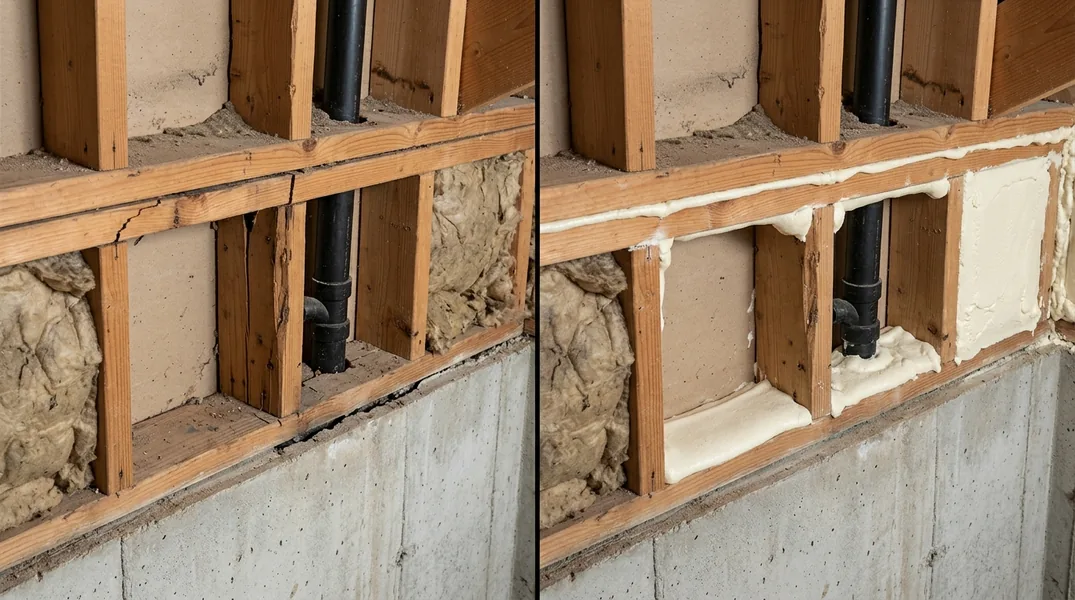
Understanding Spray Foam Insulation R-Value Per Inch
Attic Spray Foam Insulation is one of the most effective ways to improve your home's thermal performance, but understanding R-value is essential before deciding if it's right for your Fort Collins home. R-value measures thermal resistance, or how well a material slows heat transfer. The higher the R-value, the better the insulation performs. When evaluating spray foam insulation, you'll encounter two main types, each with different R-value ratings per inch.
Closed Cell Spray Foam Insulation delivers approximately 6.0 to 6.5 R-value per inch, making it one of the most efficient insulation materials available. This dense foam creates an air-tight seal while also providing structural support to your attic. In contrast, Open Cell Spray Foam Insulation offers roughly 3.5 to 3.6 R-value per inch. While this is lower than closed cell, open cell foam is more affordable and still provides excellent air sealing properties. The choice between these two depends on your budget, your attic's existing conditions, and how thick spray foam should be applied to meet your home's insulation needs.
R-Value Requirements by State: What Colorado Demands
Colorado has specific insulation standards that homeowners should follow to maintain energy efficiency and comply with building codes. For attics in Fort Collins, the International Energy Conservation Code (IECC) recommends an R-value of R-38 to R-49 for attic insulation, depending on your specific climate zone. Fort Collins falls into a climate that experiences cold winters and moderate summers, which means adequate attic insulation is critical for reducing heating costs during the long winter months.
Meeting R-value requirements by state isn't just about comfort. It also affects your eligibility for energy efficiency incentives. Many homeowners don't realize that upgrading their insulation can qualify them for federal rebates and deductions. If you're planning a major attic renovation, understanding these requirements upfront helps you make a decision that will pay dividends in energy savings and potential tax benefits. The thickness of your spray foam application directly impacts whether you'll meet these standards, so professional assessment is key before installation begins.
How Thick Should Spray Foam Be in Your Attic?
Determining how thick spray foam should be is one of the most common questions homeowners ask when planning an attic upgrade. The answer depends on your target R-value, which in turn depends on Colorado's building codes and your home's current insulation levels. If you're aiming for the recommended R-38 to R-49 range for Fort Collins homes, you'll need different thicknesses depending on whether you choose closed cell or open cell foam. With closed cell foam at 6.0 R-value per inch, you'd need approximately 6.5 to 8 inches to reach R-39 to R-48. With open cell foam at 3.5 R-value per inch, you'd need roughly 11 to 14 inches for the same R-value range.
Beyond meeting code requirements, thickness also plays a role in air sealing effectiveness. Thicker applications provide better coverage of gaps, cracks, and penetrations in your attic, which is where most homes lose conditioned air. A professional assessment from Fort Collins Spray Foam Insulation can determine the optimal thickness for your specific attic layout, existing insulation, and performance goals. Some homeowners benefit from a hybrid approach, combining thinner spray foam application for air sealing with additional fiberglass or mineral wool batts to reach target R-values at a lower cost.
Air Sealing vs. Full Foam Installation: Which Is Right for You?
The decision between air sealing alone and a full foam installation depends on your attic's current condition and your budget. Air sealing focuses on closing gaps, cracks, and penetrations where air leaks occur. This is typically done with caulk, weatherstripping, or a thin application of spray foam around rim joists, ductwork, and other problem areas. Air sealing is cost-effective and addresses one of the biggest sources of energy loss in most homes. However, it doesn't add much R-value on its own, so if your attic insulation is already below code requirements, air sealing alone won't solve the problem.
Full foam installation, by contrast, combines air sealing with comprehensive insulation coverage. When you apply Closed Cell Spray Foam Insulation across your entire attic, you're simultaneously sealing air leaks and adding significant R-value. This approach delivers superior energy efficiency and often qualifies for better incentives and rebates. The trade-off is cost. Full foam installations are more expensive upfront than air sealing alone, but the long-term energy savings and increased home value often justify the investment. Many Fort Collins homeowners find that a full foam approach pays for itself within 5 to 10 years through reduced heating and cooling costs.
Rebates Available in Fort Collins
The federal insulation tax credit ended on December 31, 2025, so ask your utility company about any current rebates instead. Additionally, many local utility companies in the Fort Collins area offer rebate programs for homeowners who improve their insulation. These rebates can further reduce your out-of-pocket costs and improve your return on investment.
To take advantage of these incentives, it's important to work with a qualified contractor who understands the requirements. Not all insulation projects qualify, and proper documentation is essential for claiming. When you contact Fort Collins Spray Foam Insulation for your free estimate Our team stays current on all available incentives and can help you maximize your savings. Many homeowners are surprised to learn how much of their insulation upgrade can be offset by these programs, making energy efficiency improvements more accessible than ever.
Attic Spray Foam Insulation Cost in Fort Collins: What to Budget
Understanding the pricing for spray foam insulation helps you make an informed decision. The cost varies based on several factors, including the size of your attic, the type of foam you choose, how thick spray foam should be applied, and your attic's current condition. On average, homeowners in Fort Collins can expect to pay between $1.50 and $3.00 per board foot for spray foam insulation installation. For a typical 1,500 square foot attic, this translates to $3,000 to $6,000 or more, depending on the specific circumstances of your project.
While spray foam costs more upfront than traditional fiberglass insulation, the superior air sealing properties and higher R-value per inch often make it the better long-term investment. When you factor in potential rebates, the net cost becomes significantly lower. Additionally, the energy savings from improved insulation typically reduce your heating and cooling bills by 10% to 30%, depending on your current insulation levels. To get an accurate estimate for your specific attic, contact Fort Collins Spray Foam Insulation at (970) 672-0707 or request a free estimate online. Our team will assess your attic, discuss your goals, and provide transparent pricing before any work begins.
Looking for a professional spray foam insulation contractor in Fort Collins? Fort Collins Spray Foam Insulation responds fast for all your spray foam insulation needs.
Get a Free Quote